
EV vs Hybrid: The Smartest Money-Saving Choice in 2026?
If you’re cross-shopping an EV vs hybrid in 2026, the honest answer is: it depends entirely on how, where, and how far you drive. We pulled apart the numbers on purchase price, fuel and electricity costs, maintenance, resale value, and incentives to find out which option actually keeps more money in your pocket — not just on paper, but over years of real ownership.
Quick Answer
- Drive under 15,000 miles a year and can charge at home? An EV usually wins on total cost of ownership within 3–5 years.
- Drive long distances, tow, or can’t charge at home? A hybrid usually saves you more, with far less hassle.
- Buy used? Hybrids depreciate less painfully and remove most of the EV battery-risk question.
Now let’s break down exactly why.
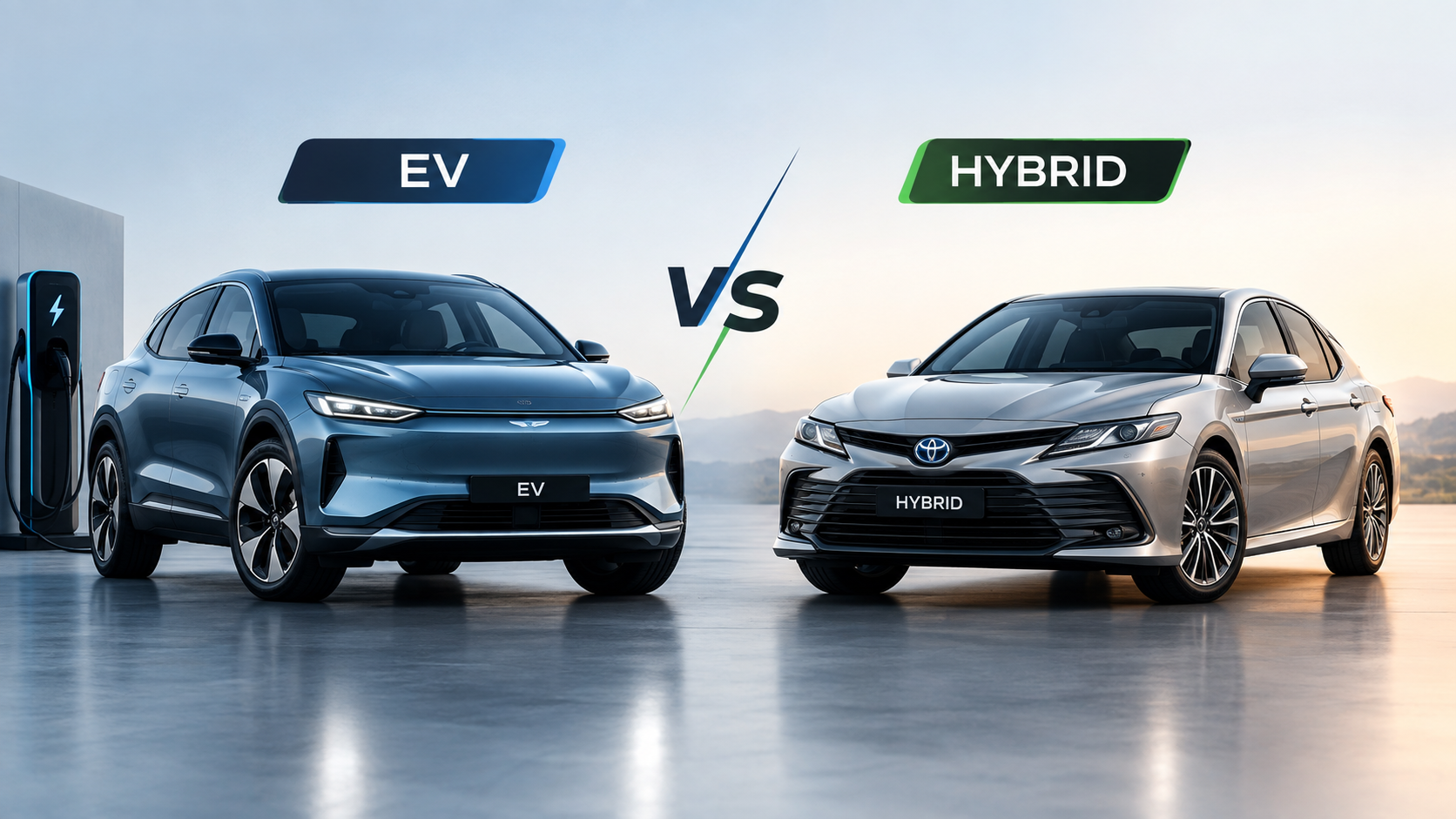
What's the Real Difference Between an EV and a Hybrid?
Before comparing costs, it helps to be clear on what you’re actually buying.
How a Full EV Works
A battery-electric vehicle (EV) has no gasoline engine at all. It’s powered entirely by a battery pack and electric motor, charged from a wall outlet, home charger, or public charging station. There’s no oil to change, no exhaust system, and far fewer moving parts than a combustion engine — which is where a lot of the long-term savings come from.
How a Hybrid (and PHEV) Works
A standard hybrid pairs a small gas engine with a battery and electric motor that assists during acceleration and low-speed driving, recharging itself as you brake and coast. You never plug it in. A plug-in hybrid (PHEV) adds a larger battery that can be charged externally, giving you 20–40 miles of electric-only range before the gas engine takes over — the closest thing to “best of both worlds” for buyers who aren’t ready to go fully electric.
Upfront Price: EV vs Hybrid in 2026
Sticker price is usually the first shock for EV shoppers. In 2026:
- Compact and midsize hybrids typically start $2,000–$4,000 above their gas-only equivalents.
- Mainstream EVs (Chevy Equinox EV, Hyundai Ioniq 5, Tesla Model 3) generally start $5,000–$12,000 above a comparable gas or hybrid trim, before incentives.
- Luxury and performance EVs can cost the same or even less than equivalent gas models, since automakers are pricing aggressively to move inventory.
Federal, state, and manufacturer incentives can close this gap significantly — more on that below — but if you’re financing, the higher EV sticker price means a higher monthly payment before you’ve saved a cent on fuel.
Fuel and Energy Costs Compared
This is where EVs usually start clawing back the difference.
| Cost Factor | Gas Vehicle | Hybrid | EV |
|---|---|---|---|
| Avg. cost per 100 miles (home charging) | $12–$16 | $7–$10 | $3–$5 |
| Avg. cost per 100 miles (public fast charging) | — | — | $9–$14 |
| Annual fuel/energy cost (12,000 mi/yr) | ~$1,700 | ~$1,000 | $450–$700 |
Charging at home overnight, on off-peak electricity rates, is where EVs deliver their biggest financial edge. That advantage shrinks — sometimes disappears — if you’re relying mainly on public DC fast chargers, which can cost close to what you’d pay for gas per mile in some regions.
Maintenance and Repair Costs ( EV vs Hybrid )
Over a 5-year ownership period, this is usually the second-biggest gap:
- EVs skip oil changes, spark plugs, exhaust repairs, and transmission service entirely. Brake pads also last longer thanks to regenerative braking. Studies from fleet-maintenance data typically show EVs cost 30–40% less to maintain annually than gas vehicles.
- Hybrids still have a gas engine and traditional maintenance needs, but benefit from the same extended brake life. Expect maintenance costs 10–20% lower than a pure gas vehicle.
- Battery replacement is the wildcard for both. Most EV and hybrid batteries are now warrantied for 8 years/100,000 miles, and real-world data suggests the majority outlast that — but a post-warranty EV battery replacement can run $5,000–$15,000, which is worth factoring in if you plan to keep the car a long time.
Charging vs Fueling: The Convenience Factor
Cost isn’t the only thing that affects your wallet — time and hassle matter too:
- Home charger installation for an EV typically runs $800–$2,500, a one-time cost that pays for itself if you drive regularly.
- No driveway or garage? Relying on public charging adds cost, unpredictability, and time that a hybrid owner never deals with.
- Hybrids never require route planning around chargers — you fuel up in five minutes anywhere, which matters most for road trips, rural areas, and anyone without reliable home charging.
Resale Value in 2026 EV vs Hybrid
Hybrids have historically held resale value better than EVs, mainly because buyers aren’t worried about battery degradation or a fast-moving EV market making older models feel outdated. That said, the gap has been narrowing as EV battery longevity data improves and more buyers shop used EVs for the lower running costs. Popular hybrids (RAV4 Hybrid, Camry Hybrid) still tend to retain more of their value after 3–5 years than most mainstream EVs.
Tax Credits and Incentives
Both new and used EVs and PHEVs can qualify for federal and state incentives, but eligibility depends on your income, the vehicle’s price, battery sourcing, and where it’s assembled — rules that have changed multiple times in recent years. Before you buy, always check current eligibility directly through official sources like the U.S. Department of Energy’s Alternative Fuels Data Center and fueleconomy.gov, since incentives can add up to several thousand dollars — or reduce the effective price gap between an EV and hybrid to almost nothing.
Which One Actually Saves You More Money? By Driving ProfileCity Commuters (under 15,000 mi/year, home charging available)
EV wins. Low daily mileage plus cheap overnight home charging means you’ll recover the price premium in fuel savings alone within a few years, before maintenance savings are even counted.
Long-Distance and Road-Trip Drivers
Hybrid wins. Frequent long trips mean more reliance on public charging (slower and pricier) and more time lost to charging stops. A hybrid refuels in minutes and delivers 45–55 mpg on the highway with zero range anxiety.
No Home Charging Access
Hybrid wins, decisively. Without a home charger, most of an EV’s cost advantage disappears, and you’re left with the inconvenience of public charging without the savings to justify it.
Buying Used
Hybrid is the safer bet for most budgets, since you avoid uncertainty around battery health and charging infrastructure access, and hybrids depreciate more predictably.
EV vs Hybrid: Pros and Cons at a Glance
EV Pros: Lowest running costs with home charging, fewer moving parts, instant torque, often eligible for the biggest incentives, zero tailpipe emissions.
EV Cons: Higher upfront price, charging infrastructure still inconsistent in many areas, resale value less predictable, longer refueling stops on road trips.
Hybrid Pros: No charging required, smaller price premium over gas, strong resale value, ideal for long-distance and rural driving.
Hybrid Cons: Still burns gas, smaller efficiency gains than a full EV, less dramatic long-term savings.
Our Verdict
There’s no single winner in the EV vs hybrid 2026 debate — the right choice comes down to your driving pattern and charging access. If you commute locally and can charge at home, an EV will very likely save you more money over 5 years. If you drive long distances, live somewhere without reliable charging, or want to avoid any uncertainty around battery costs, a hybrid remains the safer financial choice today.
Frequently Asked Questions
Is an EV cheaper to own than a hybrid in 2026? For drivers with home charging and typical commuting mileage, yes — lower fuel and maintenance costs usually outweigh the higher purchase price within 3–5 years. Without home charging, a hybrid is often cheaper overall.
Do hybrids need less maintenance than gas cars? Yes. Hybrids typically need 10–20% less maintenance than a comparable gas-only vehicle, mainly due to reduced brake wear from regenerative braking.
How long do EV batteries actually last? Most manufacturers warranty EV batteries for 8 years or 100,000 miles, and real-world data suggests the majority retain usable capacity well beyond that window.
Is a plug-in hybrid (PHEV) a good middle ground? For many buyers, yes. A PHEV lets you drive electric-only for most daily trips while keeping a gas engine for longer journeys, without any dependence on public charging infrastructure.
Want to see how these numbers play out in a specific model? Check out our latest car reviews and side-by-side comparisons to findthe right EV or hybrid for your budget. DEVANSH